8 Powerful Ways to Manage Career Anxiety
By Vanshika Parmar · 25 April 2024 · 11 min read
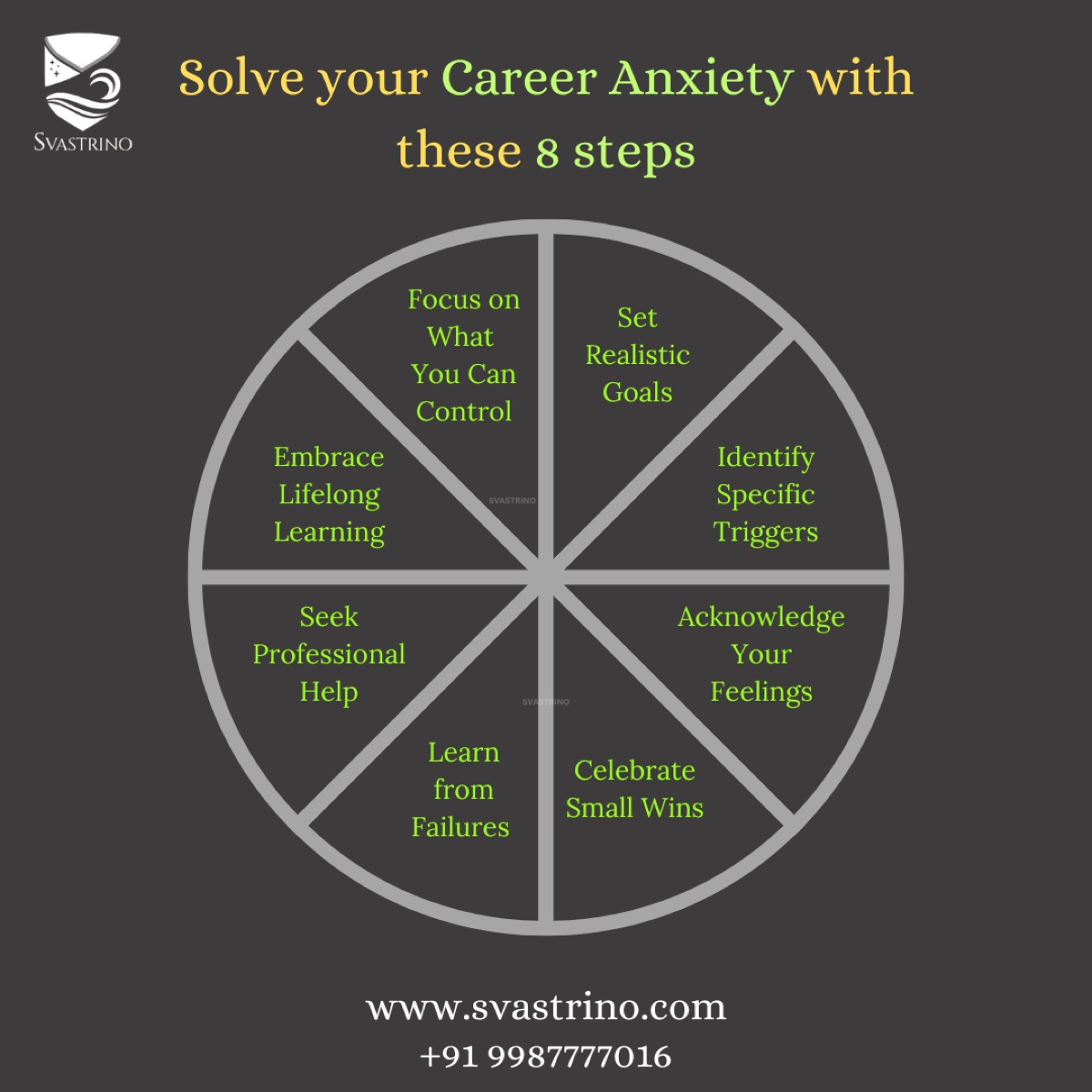
Many of us experience anxiety in today's society because professional pathways are getting more and more complicated. This emotion, which is frequently disregarded as "work stress," has deeper roots. It's known to be career anxiety. While the name could seem intimidating, it is something that many of us go through without acknowledging it. Career anxiety is not about worrying about critical meetings or presentations; it is about continuous concern about work stability, development, and contentment, which might stick around like a shadow.
There is a misconception that career anxiety is just a fancy way of saying you are nervous at work. However, it extends beyond that. It's the type of concern that dampens Sunday evenings and makes Monday mornings seem intimidating. But here's the thing: you don't have to accept it as a part of your existence. Recognizing what anxiety is and how it affects our lives is the first step in overcoming it. The good news, you ask? There are strategies and activities we can all do to lessen our burdens and pursue fulfilling careers.
Understanding Career Anxiety
Think of career anxiety as that little voice inside your head that constantly questions your career choices, making you wonder if you're good enough if you're heading in the right direction, or if you're going to be left behind in the professional world. It's more than just having a bad day at work; it's a persistent worry that can affect how you feel about your job and yourself.
Common Triggers
So, what lights the fuse of this career anxiety? A few usual suspects include:
- Fear of failure: Worrying that you won't meet expectations, whether your own or those of your boss or peers.
- Job insecurity: Concerns about layoffs, company stability, or the overall job market can keep you up at night.
- Comparison with peers: Scrolling through social media and seeing friends and colleagues share their successes can lead to self-doubt.
The Impact on Professional Life
You might be wondering, "Is this a big deal?" The short answer: Yes. Career anxiety doesn't just stay neatly contained in your thoughts. It spills over, affecting how you perform at work, your ability to take on new challenges, and even how you interact with colleagues. It can make you hesitant to speak up, share your ideas, or step out of your comfort zone, limiting your professional growth and satisfaction.
Strategies to Overcome Anxiety
Tackling career anxiety isn't about sweeping it under the rug and hoping it goes away. It's about facing it head-on with practical steps. The first move? Identifying what triggers your anxiety.
1. Identify Specific Triggers
Imagine you're a detective in your own life, trying to pinpoint what exactly makes your heart race and your mind whirl when it comes to your career. Is it the thought of speaking up in meetings? Fear of not hitting your sales target? Or maybe it's the uncertainty of where your career is heading.
Here's how to get to the bottom of it.
- Keep a journal: Jot down moments when you feel anxious at work. Look for patterns over time.
- Reflect on your day: Spend a few minutes at the end of each day thinking about when you felt most uneasy and why.
Identifying your triggers isn't about placing blame on yourself or others. It's about gaining clarity. Once you know what specific situations or thoughts are causing your anxiety, you can start to tackle them one by one.
2. Acknowledge Your Feelings
It's easy to brush off feelings of anxiety, telling yourself to "just get over it" or that "it's not a big deal." But those butterflies in your stomach and the racing thoughts? They're trying to tell you something. Ignoring them won't make them go away; it often makes them louder.
Here's the thing: your feelings, including the anxious ones, are part of your professional journey. They're not a sign of weakness. Recognizing and accepting your anxiety is like saying, "Okay, I see you" to that worried part of yourself. This doesn't mean you're giving in to the anxiety; you're simply acknowledging it's there.
- Give yourself permission to feel: It's okay not to be okay all the time. Everyone has moments of doubt and worry.
- Talk about it: Sharing how you feel with someone you trust can be incredibly relieving. It's like letting out a deep breath you didn't know you were holding.
- Be kind to yourself: Treat yourself with the same compassion you'd offer a friend in your shoes. Being kind to yourself can go a long way.
Acknowledging how you feel is an important step toward understanding and managing your career anxiety. It's about understanding that, while these feelings are a part of you, they do not determine your entire professional value or talents.
3. Set Realistic Goals
Dreaming big is great, but when it comes to your career, bite-sized, achievable goals are your best friends. Setting goals that feel like a stretch but are within reach can prevent that overwhelming feeling that often fuels anxiety. Think of it as setting up a series of small wins for yourself.
Here's how to get started:
- Break it down: Instead of one massive goal, break it down into smaller, more manageable tasks. Want to get a promotion? Start with improving a specific skill or leading a small project.
- Be specific: Vague goals can be daunting. Make your goals as clear as possible. "Improve public speaking skills" is good, but "Present at a team meeting without reading from notes" is better.
- Set a timeline: Having a deadline can help you stay focused and motivated. Just make sure it's reasonable to avoid unnecessary pressure.
- Celebrate progress: Don't wait until you've reached your final goal to feel proud. Appreciate each little accomplishment that comes your way.
Setting realistic objectives allows you to develop a path for your career that feels achievable. It moves the focus from what is out of reach to what can be accomplished step by step, lowering anxiety by replacing uncertainty with a defined plan of action.
4. Focus on What You Can Control
It's natural to worry about the 'what ifs' in our career, but the truth is, many aspects are beyond our control. Fixating on these can fuel our anxiety. The key? Concentrate on the parts of your professional life you can actually influence.
- Your effort and attitude: You might not be able to control the outcome of a project or a job application, but you can control the effort you put in and the attitude you bring to your work each day.
- Your skill development: Whether it's taking an online course, reading industry news, or practicing a new technique, focusing on improving your skills is something you have power over.
- Your reactions to setbacks: Setbacks are part of the journey. How you respond to them, however, is entirely up to you. Viewing them as opportunities to learn and grow can shift your perspective significantly.
Focusing on these areas reduces anxiety by replacing uncertainty with action. You might not be able to anticipate every twist and turn in your professional path, but you can surely prepare to handle them with confidence.
5. Embrace Lifelong Learning
The world of work is always changing, and keeping up can feel like a hard task. But adopting a mindset of lifelong learning can turn that challenge into an exciting opportunity. When you're committed to learning, you're not just staying relevant; you're also building confidence and reducing anxiety by knowing you're prepared for what comes next.
- Stay curious: Cultivate an interest in new skills and knowledge areas. It keeps your career journey fresh and exciting.
- Take advantage of resources: There's a wealth of knowledge out there, from online courses and webinars to podcasts and books. Several of these resources are free or inexpensive.
- Learn from experiences: Every project, every task, and every interaction is an opportunity to learn something new. Reflect on these experiences to glean insights.
- Share your knowledge: Teaching others what you've learned not only reinforces your understanding but also builds your reputation as a knowledgeable and valuable team member.
Lifelong learning isn't about constantly hitting the books; it's about maintaining a mindset of growth and adaptability. This approach can significantly lessen career anxiety by empowering you with the confidence that you're always developing and moving forward, no matter what the job market throws your way.
6. Learn from Failures
Nobody likes to fail, but here's a different way to look at it: each failure is just another lesson in disguise. Instead of letting setbacks knock you down, use them as an opportunity to grow stronger and wiser in your career. This shift in mindset can transform the way you perceive challenges and reduce anxiety.
- Reframe the experience: Instead of seeing a failure as a dead end, consider it a detour on your career path. What can it teach you?
- Analyze what happened: Take a step back and objectively look at the situation. What factors contributed to the outcome? What could be done differently next time?
- Seek feedback: Sometimes, it's hard to see the whole picture on your own. Asking for feedback from trusted colleagues or mentors can provide valuable insights.
- Be resilient: Bouncing back from failure with determination shows true resilience. Remember, every successful person has faced setbacks at some point.
Embracing failures as learning opportunities helps to alleviate the fear of making mistakes, a common trigger for career anxiety. By adopting this approach, you not only build resilience but also create a foundation for future success.
7. Celebrate Small Wins
In the hustle of daily work life, it's easy to overlook the small victories. But here's the thing: every step forward, no matter how small, is progress. Recognizing and celebrating these moments can boost your morale, build momentum, and ease the grip of career anxiety.
- Acknowledge your efforts: Completed a challenging task? Did you meet a tight deadline? Take time to recognize your hard effort.
- Share your achievements: Sharing your successes with colleagues or your support network can multiply the joy and encourage a culture of recognition and positivity.
- Reflect on your journey: Regularly look back at where you started and appreciate how far you've come. This can be a powerful antidote to feeling stuck or overwhelmed.
Celebrating small wins helps shift the focus from what's lacking to what's been accomplished, reducing career anxiety by reinforcing a sense of achievement and capability.
8. Seek Professional Help
Managing a career path is not always easy, and it is OK to seek help. A professional mentor can act as a supportive partner, providing insights from their own experiences, advice on challenging situations, and assisting you in seeing the big picture while you're caught up in the details.
- Be open to feedback: A mentor can offer constructive feedback that's crucial for your growth. While it might be tough to hear at times, remember it's meant to help you improve.
- Set clear objectives: To make the most of this relationship, be clear about what you want to achieve. Whether it's improving certain skills or navigating career transitions, knowing your goals can help your mentor provide targeted support.
- Embrace the learning: Mentorship is a two-way street. Be prepared to not only receive guidance but also to engage actively in the process, asking questions and reflecting on the advice given.
Tackling career anxiety isn't about finding a one-time fix; it's about adopting ongoing strategies that empower you to navigate your professional path with confidence. Remember, it's perfectly normal to feel anxious about your career at times. What matters is how you respond to these feelings.
From identifying your specific triggers to embracing lifelong learning, each strategy we've discussed is a step towards not just managing anxiety but thriving in your career. Celebrating small wins, learning from failures, and leaning on your support network are all part of building a resilient, fulfilling professional life.
And if you're looking for structured support to hit the bull's eye in your career goals, consider programs like Svastino's Bull's Eye Program. The Bull's Eye Session is designed to provide clarity and direction, helping you to craft a career plan that's as unique as you are. It's about gaining confidence in your choices and moving forward with purpose. So, if you're ready to turn those career anxieties into actionable plans, the Bull's Eye Program might just be what you need. In the end, the key is to keep moving forward, one step at a time, with an open mind and a willingness to grow. Your career is a significant part of your life, but it doesn't define your entire identity. Take a deep breath, embrace the journey, and remember, you've got this.
Want guidance on your own path?
Start with a 15-minute Model Session — we’ll help you identify what you need and which program fits you.
Book a sessionRelated reading

Finding Meaning and Purpose in Your Professional Life
In the hustle of our daily work lives, it's easy to get caught up in the routine and forget to ask ourselves a crucial question: "What am I really working for?" For…

Top 5 Tips for Building Confidence in Students
Confidence is not 'they will like me.' Confidence is 'I'll be fine if they don't.'

Top 5 Career Planning Mistakes Students Should Avoid
Planning a career can feel like a big task, especially with all the options and expectations students face today. Between focusing on grades, choosing the "right"…